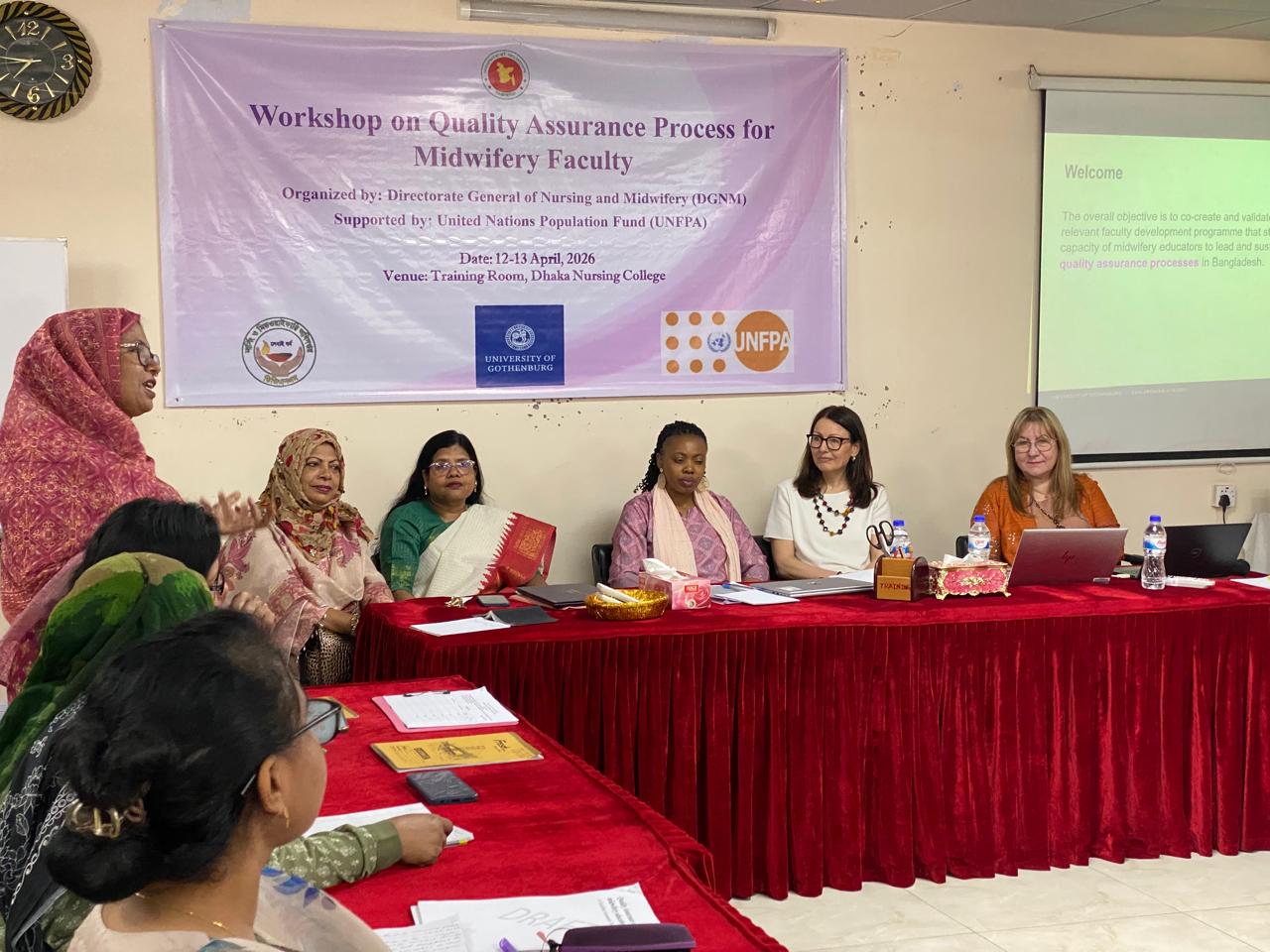
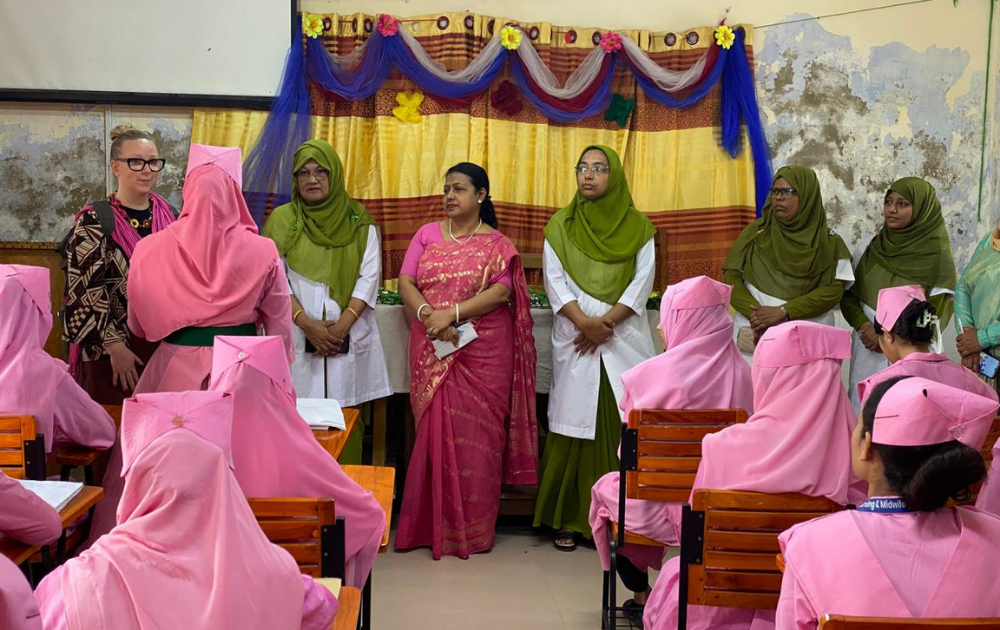
On the drive back to the hotel, we watch the lime-green rice fields stretch across the landscape after another long day of workshops with midwifery educators in Bangladesh. We have just completed a workshop at one of the ten midwifery education institutions selected to test a new system for improving educational quality. During the day, we discussed challenges, shared experiences from previous visits, and explored how the schools could continue strengthening their education programmes.
The atmosphere in the car is positive. The workshop was appreciated, and the discussions were lively, but one concern keeps returning. Here too, the educators asked the same question we had heard at other institutions: How are we supposed to improve quality when we are already understaffed and overwhelmed? Their question stayed with us for the rest of the drive through the green landscape. Was quality assurance simply another administrative burden? Or could it actually help create clearer structures, better support, and more sustainable ways of working in the long term?
Since Bangladesh officially introduced midwifery as a profession in 2010, extensive efforts have been made, together with national and international partners, to establish and strengthen midwifery education across the country. Research shows that improvements in maternal and newborn health rarely depend on a single intervention. Safer childbirth depends on many factors working together: access to healthcare facilities, skilled maternity care providers, affordable care, and high-quality services. At the centre of all of this is a well-educated midwifery workforce.
In the early years, the priority was clear: Bangladesh needed more midwives. However, despite important progress, the decline in maternal mortality has recently begun to slow, both in Bangladesh and globally. This suggests that the next challenge is not only about training more midwives, but about ensuring that midwives receive the highest possible quality of education.
When people hear the term “quality assurance,” it can sound technical and bureaucratic. In practice, it is about creating systems that help educational programmes continuously improve. Internal quality assurance means that schools themselves regularly evaluate their teaching, identify problems early and work systematically to improve education. Rather than only reacting when problems become acute or relying solely on external inspections.
In 2024, a new internal quality assurance process was developed and introduced at 31 midwifery schools in Bangladesh (
Development of a Quality Assurance Assessment Tool to meet accreditation standards for midwifery education: A Delphi study - PubMed). The work followed a step-by-step improvement model (Plan–Do–Study–Act cycle). The schools received practical tools and templates to help them assess their own education programmes and document areas for improvement (
Evaluating an internal quality assurance process for achieving national accreditation standards in midwifery education: a study protocol - PubMed).
At the same time, the implementation process also revealed something equally important: improving education requires supporting the educators themselves. Many educators described a strong need for more pedagogical training, mentorship, and professional support. To better understand these needs, we at the University of Gothenburg conducted a study. The study explored which areas of professional development midwifery educators in Bangladesh themselves identified as important for contributing to high-quality midwifery education (
Accelerating quality midwifery education: identifying educators' professional development needs - PubMed).
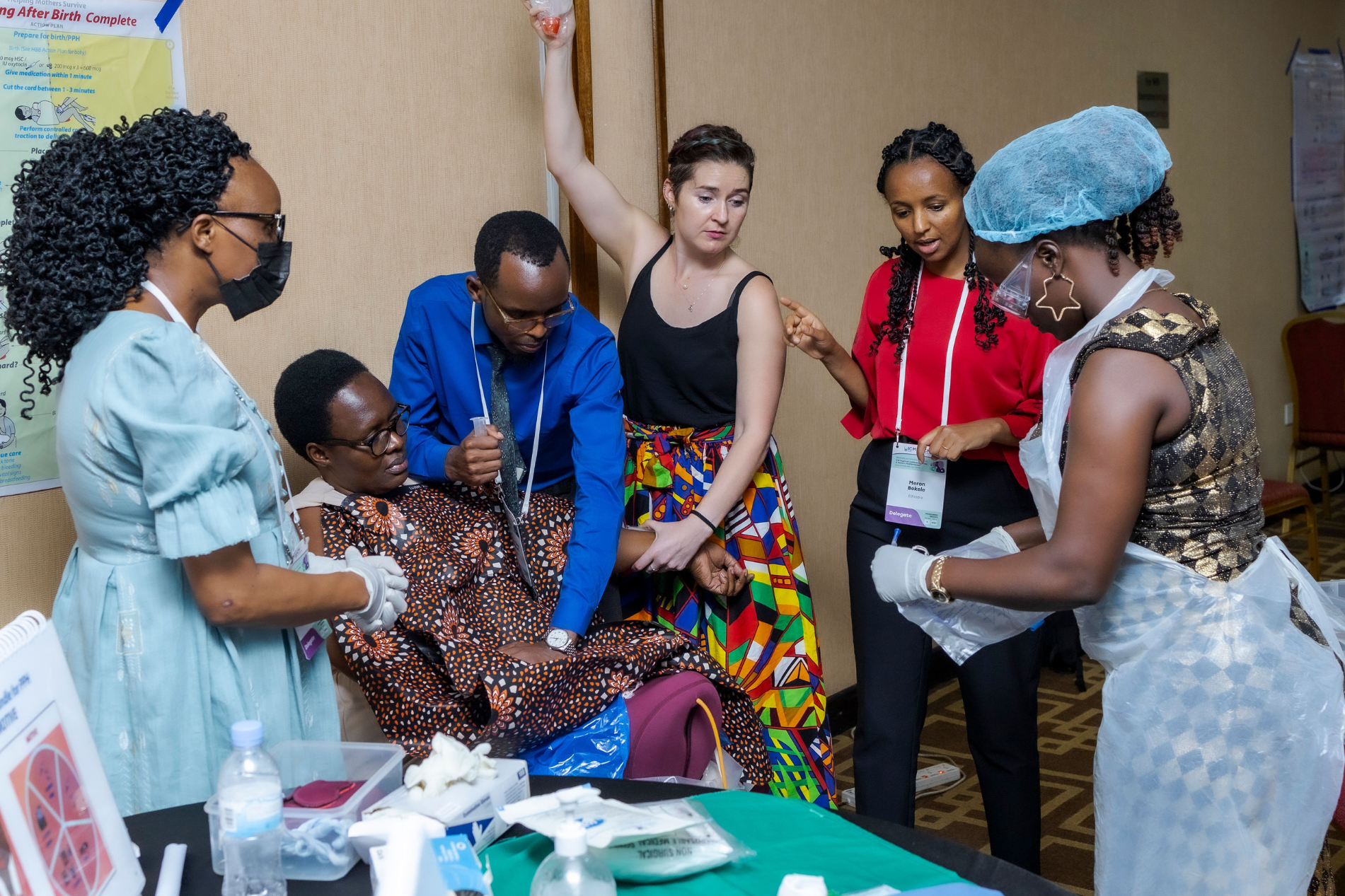
The educators wanted support not only in teaching, but also in research and leadership. Educators particularly requested support in teaching midwifery theory, pedagogical methods for classroom teaching, simulation-based learning, and curriculum development. Research competence, especially scientific writing, and leadership development were also identified as important areas. Many additionally preferred shorter, intensive face-to-face training sessions over online education.
Overall, the findings demonstrate that continued investment in midwifery educators’ professional development is essential for strengthening the quality of midwifery education in Bangladesh. They also highlight the need for a national, sustainable, and context-adapted programme for educator development, designed in line with the International Confederation of Midwives (ICM) global standards for midwifery educators.
As we travel through the green landscape, we keep returning to the educators’ question. Our experiences showed that sustainable quality improvement cannot depend on individual educators alone. National leadership can provide direction, but real change depends on local leadership, working conditions, and whether quality improvement becomes part of daily practice. At the same time, the findings show that sustainable quality assurance also requires continued investment in educators’ professional development. Bangladesh has already taken major steps in building the midwifery profession. The next step may be even more challenging: creating sustainable systems that support high-quality education and the educators responsible for delivering it.