Person-centred care (PPC) has been shown to strengthen the quality of maternal and newborn healthcare by improving maternal well-being, newborn outcomes, equity in service delivery, and overall care experiences. Simulation-based learning (SBL) similarly represents a transformative pedagogical approach, allowing midwifery students and healthcare providers to acquire clinical and communication skills in a safe environment where practice, feedback, and reflection enhance professional competence and confidence. Together, these approaches carry strong potential to elevate the quality of sexual and reproductive maternal and newborn, adolescent health (SRMNAH ) care, through integrated PPC and SBL in midwifery education and in practice.
During an online exploratory meeting held in May 2025, representatives from University of Gothenburg (UGOT), The United Nations Population Fund (UNFPA), World Health Organization (WHO), International Confederation of Midwives (ICM), European Midwives Association (EMA), Laerdal, University of Borås (UB), and Gothenburg Centre for Person-Centred Care (GPCC) expressed an interest in forming a research consortium dedicated to advancing the integration of person-centred care and simulation-based learning in midwifery education and practice. Participants highlighted a series of shared priorities, including the need to clarify varying definitions of “centeredness,” strengthen existing competency-based education models, investigate cost-effectiveness, and explore the potential of simulation for continuous on-the-job skill-building with a person-centred focus. The meeting also underscored opportunities for integration of these approaches at educational, organizational, national, and global levels. To build on this momentum, a
workshop was held to establish a shared conceptual understanding, co-develop research priorities, and formalize collaborative structures.
The
Global Research Consortium for Person-Centred Care and Simulation in Midwifery Education and Practice grew out of
implementation research in the Democratic Republic of Congo, where PCC and SBL were introduced together as complementary parts of a midwifery education programme. The findings demonstrated that the two approaches can strengthen one another, but how to capitalise on these early research findings is yet to be explored in different educational, contexual and organisational conditions.
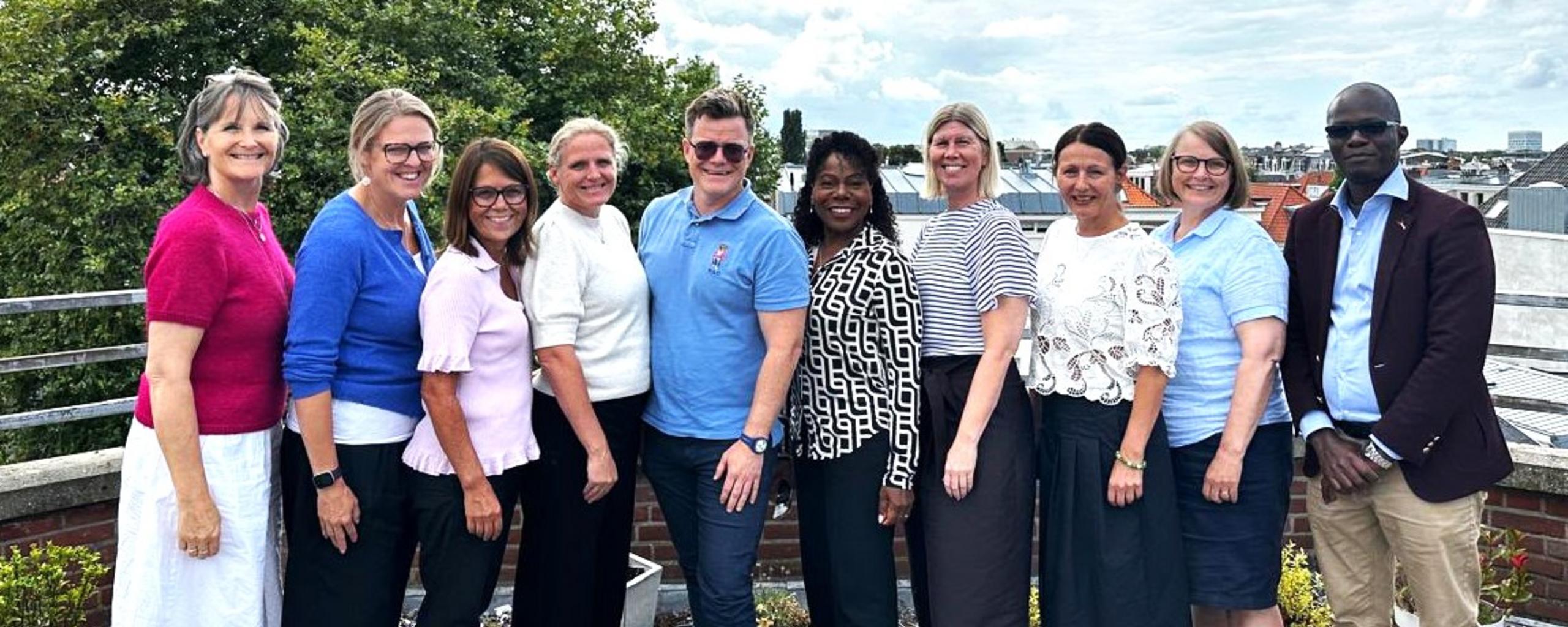
In August 2026, the Consortium held its first face-to-face workshop at ICM headquarters in The Hague. Over two days, midwifery, PCC and simulation experts mapped the current gaps in research and knowledge on PCC and SBE, including the terminology and system-level approaches needed for change. Participants also agreed that meaningful involvement of women, families and communities cannot be an afterthought. The Consortium is building
patient and public involvement (PPI) into its governance and research priorities from the outset.
The consortium identified a need for global standards to shape how PCC and simulation can be applied in education and practice. The consortium partners with other experts, will work collaboratively on new ICM Global Standards alongside a UNFPA Implementation guide, ensuring the standards move beyond guidance to action. Concurrently, research led by the University of Gothenburg and the Gothenburg Centre for Person Centred Care will support the process and implementation by analysing how the consensus progress is developed, applied and what support is needed to ensure these resources meet the needs of different national contexts and translate into enhanced quality of care.
Simulation-based education and practice can enhance the quality and safety of care. Person-centred care should be a prerequisite for all health professionals; it ensures individuals are treated with dignity and respect and are active participants in their care, leading to better health outcomes, higher satisfaction, and a more efficient healthcare system. However, global standards, guidance, and implementation support for how these concepts should be understood; integrated and applied in midwifery education remain lacking. The consortium seeks to answer these challenges.
For more information,
Contact the AIME Secretariat to express interest in contributing to the Consortium’s work:
k.stringer@internationalmidwives.org .png)