Project-Based Learning and the Future of Midwifery Education
Dr. Rizka Ayu Setyani, SST, MPH – Faculty of Medicine, Universitas Sebelas Maret, Indonesia; Steering and Coordination Group Member, Alliance to Improve Midwifery Education (AIME).
Global Gaps in Maternal Health Education
Around the world, maternal and child health remain pressing concerns. The State of the World’s Midwifery Report points to a shortage of almost one million midwives, a gap that directly contributes to preventable maternal and newborn deaths. Yet the challenge is not only about numbers. Education programs for mothers often remain conventional and theory-heavy, delivered in health facilities with limited interaction. Women may leave sessions with information but without the confidence to apply it in daily life.
This global reality underscores the need for community-rooted innovations that connect midwifery education with families' lived experiences. It is here that project-based learning (PBL) offers a transformative approach: students and educators engage directly with communities, applying theory in practice while simultaneously empowering mothers.
Strengthening Kelas Ibu in the Indonesian Context
In Indonesia, the kelas ibu (mother class) program at primary health care has long been a cornerstone of maternal health education. Its purpose is clear: to provide knowledge and support for pregnant women and mothers of young children. Yet implementation often faces limitations. Sessions are typically lecture-based, midwives are overburdened with clinical duties, and mothers may leave without the confidence to practice what they have learned at home.
These challenges do not diminish the value of kelas ibu. Instead, they highlight the need for complementary models that enrich and sustain maternal health education.
A Community Partnership Model
The Sekolah Komplementer Cinta Ibu (SEKOCI) program in Indonesia was designed precisely to fill this gap. Rather than replacing kelas ibu, SEKOCI complements and strengthens it by embedding project-based learning into community practice.
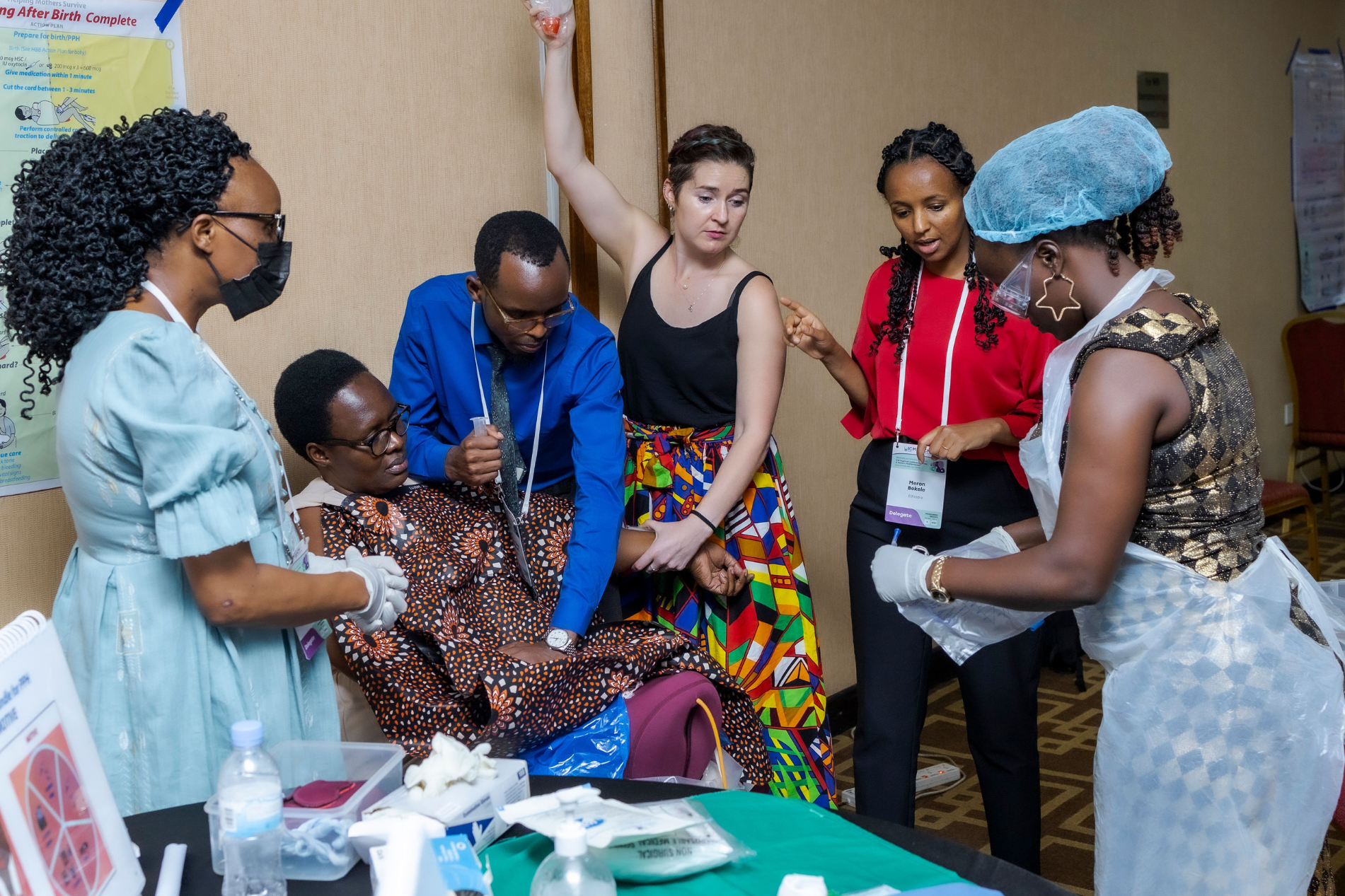
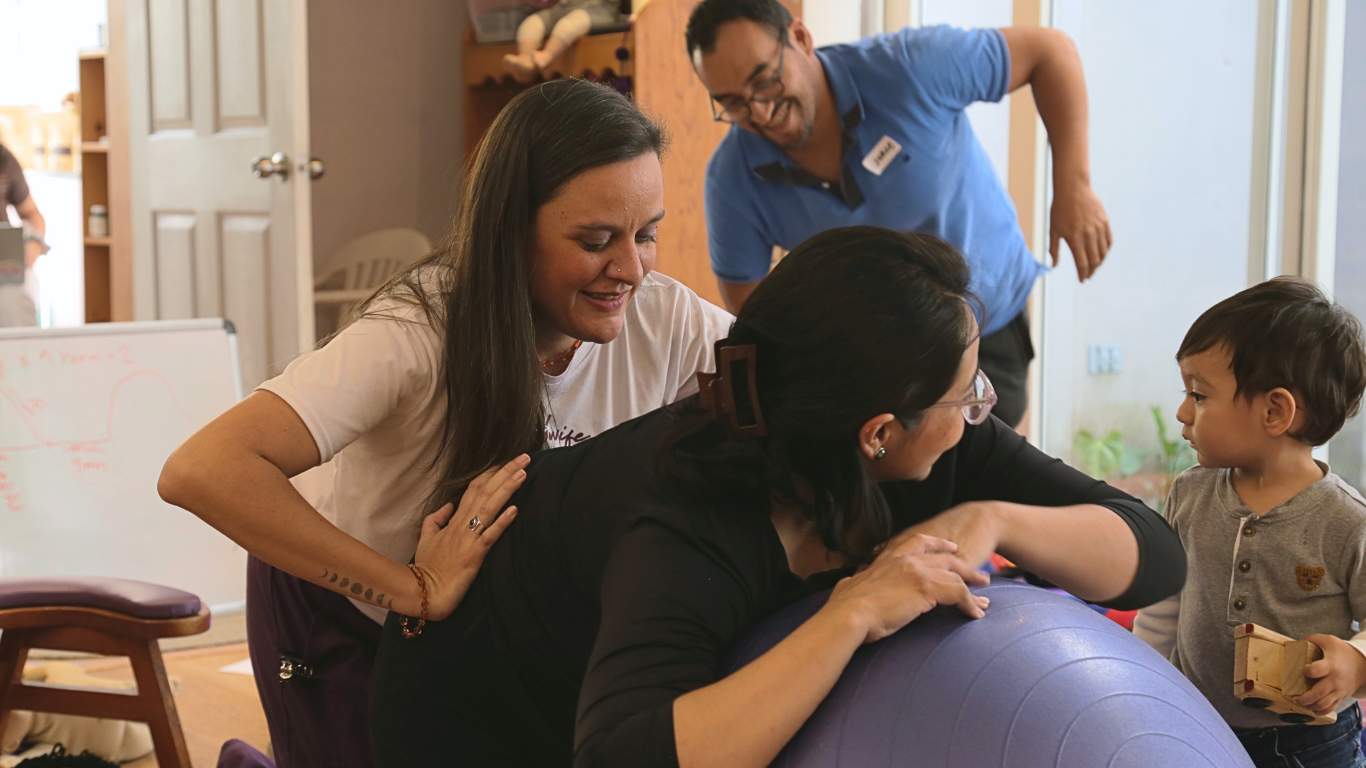
Academics and midwife students step in as educators, supported by practitioners, government, and CSR partners. Mothers participate in sessions that are practical, interactive, and holistic: prenatal yoga to reduce anxiety, baby massage to stimulate development, nutrition counselling to support healthy growth, and relaxation techniques to build resilience. These interventions are not abstract theories but skills that mothers can apply immediately in their homes.
A Paradigm Shift of Academics as Educators
SEKOCI represents a significant shift in midwifery education. Traditionally, lecturers and students had limited direct engagement with mothers outside clinical placements. Funding constraints further restricted opportunities for community-based education. SEKOCI created a structured, legitimate space where academics could act as facilitators, bridging the gap between theory and practice.
This shift produced multiple benefits. Academics provided human resource support, relieving pressure on overstretched midwives. Students gained experiential learning, applying classroom knowledge in authentic contexts. Mothers received practical skills and psychosocial support, enhancing their agency in pregnancy and childcare.
Lessons from Theory and Practice Integration
The SEKOCI model demonstrates how project-based learning strengthens midwifery education. Theory became lived experience as students observed the calming effect of prenatal yoga on mothers. Communities demanded relevance, prioritizing practical skills over abstract lectures, compelling educators to adapt content. Collaboration sustained impact, with NGOs, government, and private partners creating an enabling environment. Reflection built critical thinking, as structured debriefs helped students connect practice with theory.
Critical Reflections for Midwifery Education
Based on
ICM Global Standards for Midwifery Education, the midwifery curriculum includes both theory and practice components, with a minimum of 40% theory and 50% practice. The SEKOCI experience invites constructive reflection.
- Should universities remain confined to classrooms and hospitals, or embed themselves in communities as active educators?
- If midwives are overstretched, how can academics ethically and effectively support promotive-preventive education?
- Can CSR and community partnerships become a new funding model for academic engagement, ensuring sustainability beyond short-term projects?
These questions encourage us to rethink the role of academics not only as knowledge producers but as agents of community empowerment.
Towards a New Paradigm
SEKOCI shows that project-based learning in community settings is not supplementary but central to midwifery education. It bridges the gap between theory and practice, strengthens public health programs, and empowers mothers with practical skills. More broadly, it demonstrates that education can be collaborative, sustainable, and deeply rooted in local realities.
Conclusion and Call to Action
Midwifery educators should integrate project-based learning into curricula, ensuring that students engage with communities as part of their training. Students can document reflections from community projects to build critical insight. Policymakers should formalize academic–community partnerships as part of maternal health strategies.
For more information and collaboration, please subscribe to the
SEKOCI YouTube Channel or contact Dr. Rizka Ayu Setyani, SST, MPH at
rizka.ayu.setyani@staff.uns.ac.id.