Learning on their own terms: how mobile technology is reshaping continuing professional development for midwives in Ethiopia
In Ethiopia today, there are around
195 maternal deaths per 100,000 live births – more than twice the Sustainable Development Goal target. Many of these deaths are preventable with access to quality care. But too often midwives lack the needed support to keep their knowledge and skills up to date.
Addressing this is urgent but complex. For many midwives, staffing shortages, heavy workloads and limited access to training make it hard to access continuing professional development.
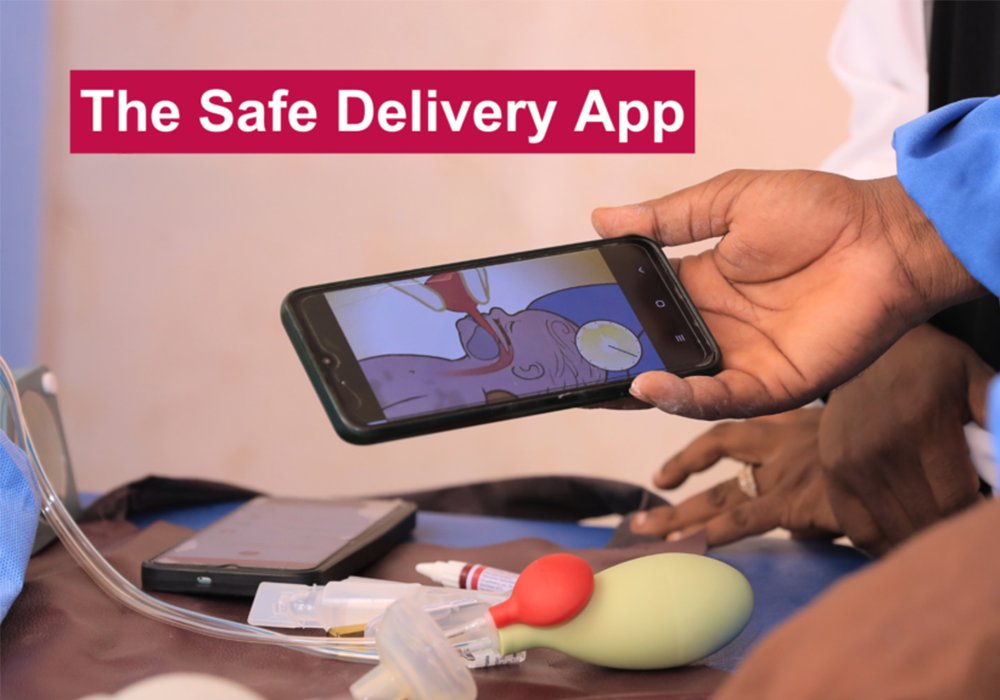
Maternity Foundation’s Safe Delivery App shows how well-designed technology can strengthen skills and knowledge, support continuing professional development, and ultimately improve the quality of care for women and newborns. Insights from a recent study reveal how midwives in Ethiopia view the App.
Structural barriers to continuing learning
In Ethiopia, midwives are required to complete 30 continuing education units each year and 90 over three years to maintain their professional licenses. While essential for ensuring up-to-date skills, this often presents significant practical challenges.
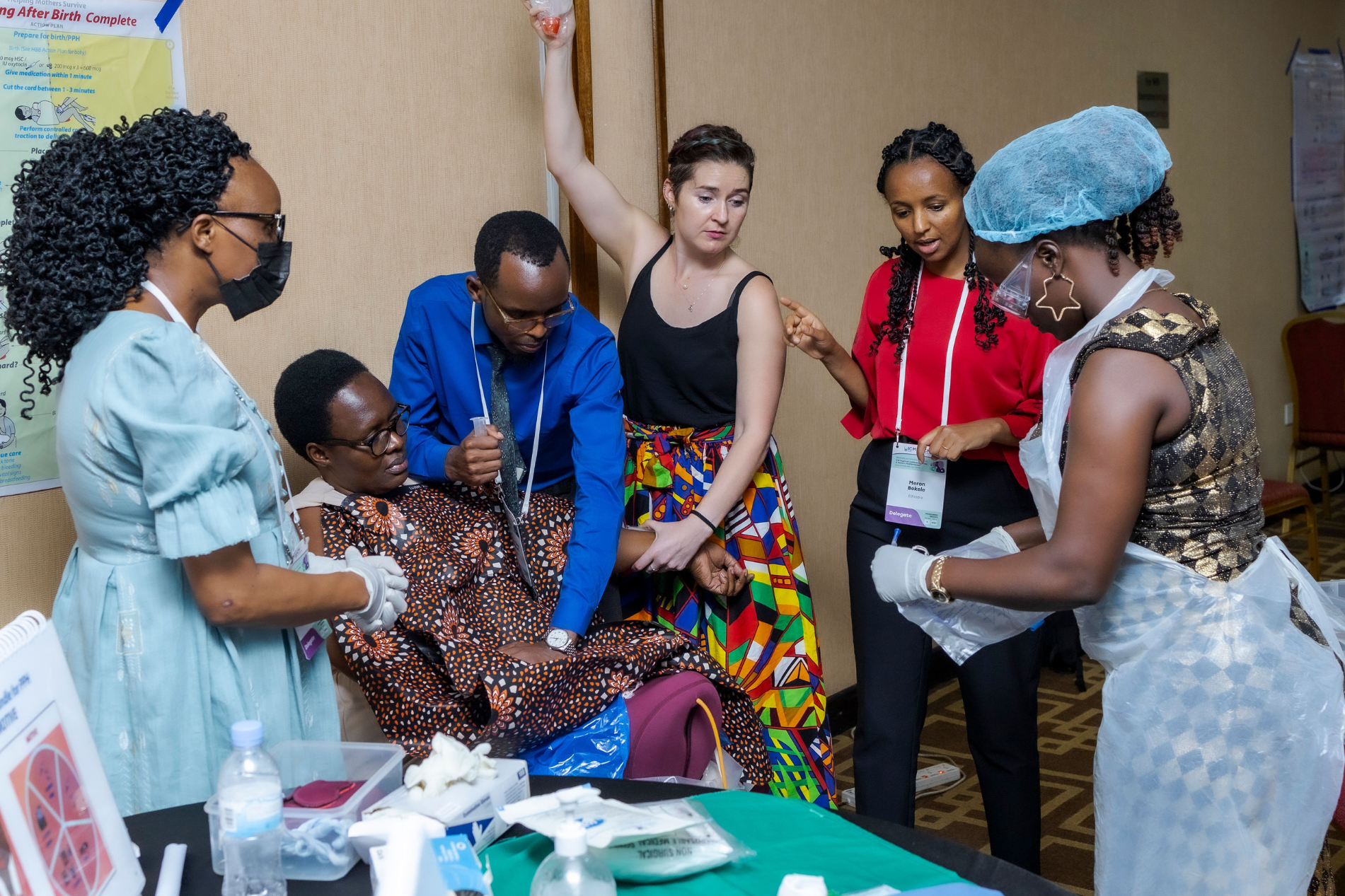
Traditional training is often delivered face-to-face in centralized locations. For midwives, this can mean travelling long distances, paying for transport out of pocket, and taking time away from already understaffed maternity wards. In practice, these barriers often prevent midwives from accessing the training they need.
The Safe Delivery App as flexible alternative: learning anytime, anywhere
Digital tools offer a more flexible and accessible approach to professional development. The Safe Delivery App is a clear example. Designed as an WHO-aligned job aid and learning tool, it supports midwives and other healthcare professionals in delivering quality preventive, routine and emergency care during pregnancy, birth and postpartum to women and newborns.
The App is free, works offline once downloaded, and is available in three local languages in Ethiopia, with 19 clinical modules. This gives midwives up-to-date information anytime, anywhere, without the need for internet connectivity or travel.
A core feature of the App is the MyLearning platform, which enables competency-based learning through interactive quizzes and self-paced modules.
Because of these capabilities, the Safe Delivery App was accredited for continuing education units in collaboration with the Government of Ethiopia and Ethiopian Midwives’ Association (EMwA) in 2024. Midwives can now earn 44 of their required 90 continuing education units for licence renewal through the App, making the App an integrated part of the national professional development system.
What midwives say: insights from Ethiopia
A 2025 study1 explored, through in-depth interviews, how midwives in Addis Ababa perceive the Safe Delivery App. Accessibility emerged as one of the most important advantages:
“The other continuous professional development courses are face to face, and it is very challenging to get there. Sometimes you will register to take continuous professional development courses, and you will wait in line to get your turn. With the Safe Delivery App, it is easier. You can access it, so you just sit somewhere, read, take the courses, and get the certificate when you finish the course. The other ones are very challenging in terms of logistics like travelling, cost of transport and things like that.”
Another midwife emphasized the flexibility of learning at their own pace:
“I find it effective to get the continuing professional development points. It's easy, accessible and it is in your hands, and you can do it in your pace.”
For many, this flexibility determines whether professional development is feasible. Digital tools remove key barriers, such as cost, travel and time away from the maternity ward, making learning achievable within demanding work environments.
From access to impact: building confidence and supporting decision-making
The value of digital professional development extends beyond convenience. As one midwife explained:
“It motivates me to learn more and now it is going beyond the continuing education units. I keep referring to the Safe Delivery App and it really boosts my confidence. It will give you some sort of assurance to do your work, and it will make you confident to manage any case”
For one head of a maternity ward, the App’s local language content has enabled her to lead her team more effectively in critical situations:
“After the Safe Delivery App what I get is, I can read the Amharic version, I can understand it easily and when we face patients with a critical condition, I review the woman's card and suggest "we need to do this and that" ... So, sometimes they wonder how I get all of this knowledge and how confidently I can explain that. It has helped me a lot.”
What the app cannot replace — and the case for blended learning
Digital learning has clear advantages but cannot fully replace traditional training.
One limitation highlighted in the study is the lack of peer interaction and professional networking. Face-to-face training provides opportunities for discussion, mentorship and shared learning – elements that are difficult to replicate digitally. In-person courses also provide welcome time outside of the clinical environment and enable midwives to attain all their accreditation points in a concentrated three-day period.
These findings point towards the benefits of a blended learning approach, rather than an either/or choice. Combining digital tools with periodic in-person training can offer accessibility, flexibility and continuous reinforcement, alongside efficiency, collaboration and peer support.
Maternity Foundation’s programme already operates on this basis, pairing the Safe Delivery App with training sessions and communities of practice.
Scaling impact through digital innovation
The experience in Ethiopia underscores a broader point: digital tools are not a silver bullet, but they are a critical part of the solution, especially when integrated into national systems. This is particularly relevant beyond urban centres, where the need for training is greatest but access is limited. In remote areas, digital solutions that are free, work offline, and are available in local languages are essential.
The Safe Delivery App and its accompanying programme have already reached more than 500,000 healthcare providers in more than 70 low- and middle-income countries, demonstrating the growing role digital tools can play in strengthening midwifery education and supporting those who deliver care on the frontlines.
Learn more about
The Safe Delivery App or visit AppStore or Google Play to download your preferred language version.
1 Bertelsen, J. M. (2025). Ethiopian midwives’ experiences using the Safe Delivery App as a continuing education tool [bachelor’s thesis, supervised by Asst.Prof. I. M. Gjødsbøl]. University of Copenhagen.