.png)
Improving Midwifery Education in Nigeria: What the Evidence Tells Us
Nigeria faces a stark reality when it comes to maternal and newborn health. According to the World Health Organization, the country has the highest maternal mortality ratio in sub-Saharan Africa (993 deaths per 100,000 live births) and the fourth highest neonatal mortality rate, at 34.3 deaths per 1,000 live births. These are not just statistics; they represent preventable tragedies.
We know that strengthening midwifery education is one of the most powerful levers available. Well-trained midwives, equipped with the knowledge and skills to provide quality maternity care, could avert up to two-thirds of maternal and newborn deaths. But are Nigeria's midwifery training institutions equipped to produce them?
A new study set out to find out.
What the Research Did
Researchers from the Liverpool School of Tropical Medicine, together with colleagues from universities in Calabar, Kano, and Zaria, assessed the preparedness of midwifery training institutions across Nigeria. The study covered 19 accredited institutions in 11 states, examining three things: the clinical competency of educators and students, the adequacy of teaching and learning resources, and the barriers and facilitators to effective midwifery education.
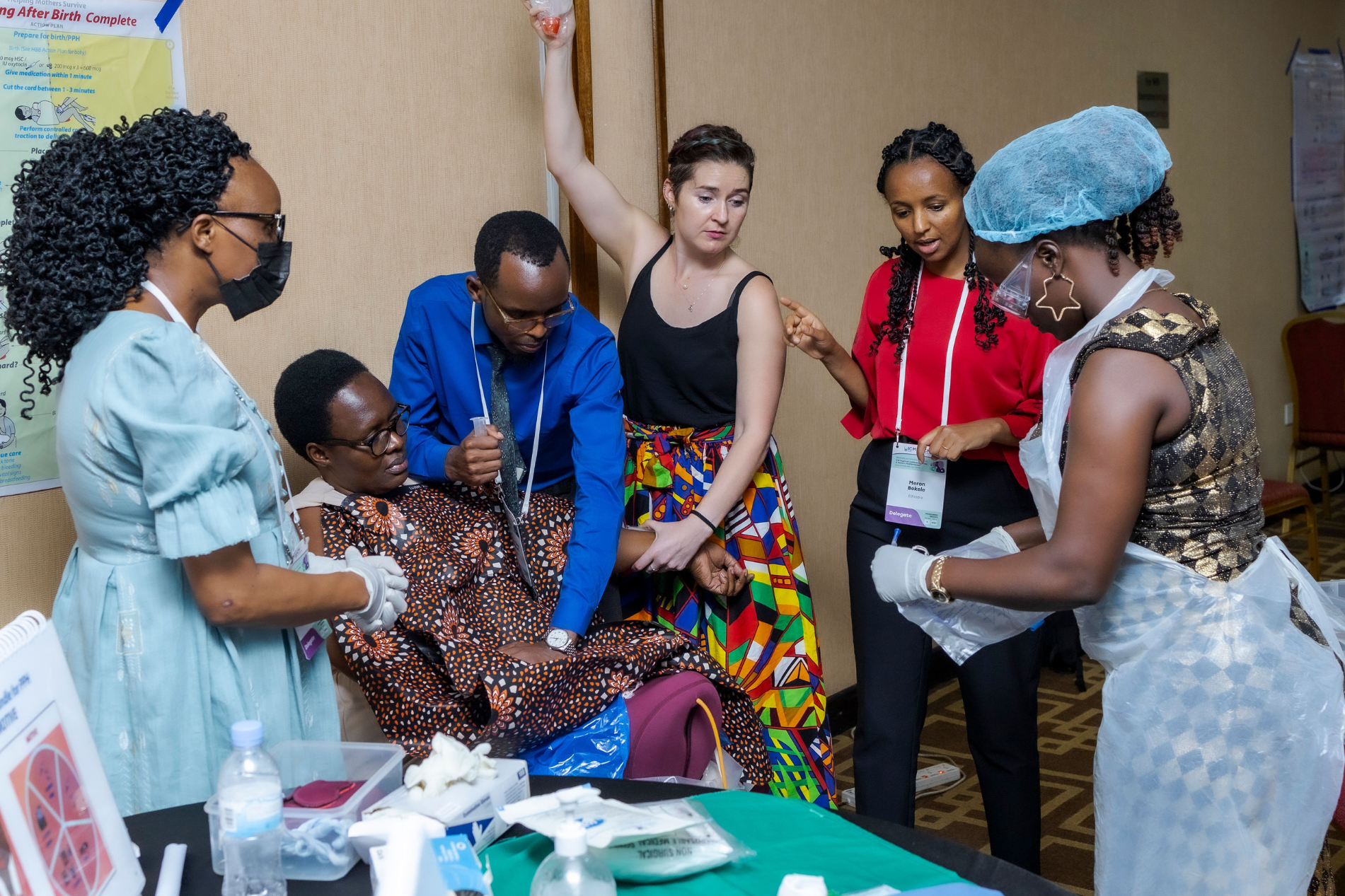
Clinical competency was assessed using Objective Structured Clinical Examinations (OSCEs), a rigorous, internationally recognised method. The assessment covered three critical skills: neonatal resuscitation, postpartum haemorrhage management, and labour care monitoring. In total, 82 midwifery educators, 22 clinical preceptors, and 72 final-year students were assessed.
What They Found
The findings are sobering and urgent.
Clinical competency was low across all groups. Only 6% of participants passed the neonatal resuscitation assessment. Just 10% passed the postpartum haemorrhage station. A striking 1% passed the labour care guide assessment. Not a single participant demonstrated competency across all three skills.
These are skills that directly determine whether a mother or newborn survives a crisis. The gaps are not minor.
Beyond individual competency, the study identified serious structural problems. Student-to-educator ratios averaged 51.7:1, this is far too high for effective clinical teaching. Simulation facilities were limited. Teaching resources were outdated, and educators reported having few opportunities for professional development. Observational data from 37 direct teaching sessions confirmed a heavy reliance on didactic, lecture-based methods at the expense of hands-on, competency-based learning.
There was, however, a clear bright spot. Institutions with upgraded skills laboratories showed dramatically better outcomes in postpartum haemorrhage management, an odds ratio of 44.4. This is a powerful signal: investment in simulation infrastructure works.
What Needs to Change
The study is clear that improving midwifery education in Nigeria is not a single-intervention problem. It requires a systems approach: addressing educator competence, teaching infrastructure, and clinical learning environments together, not in isolation.
This means:
- Sustained faculty development so that midwifery educators are clinically up to date and skilled in competency-based teaching methods
- Investment in simulation labs and teaching equipment to give both educators and students meaningful practice opportunities
- Reducing student-to-educator ratios to allow for the kind of close, skills-focused supervision that competency-based training demands
- Aligning training with international standards, including the ICM Global Standards for Midwifery Education (2025) and Nigeria's own Strategic Direction for Nursing and Midwifery (2025)
The Path Forward
Nigeria's Midwifery Accelerator Programme and the Maternal and Newborn Mortality Reduction Innovation and Initiative (MAMII) represent important national platforms for driving this change. By addressing the structural barriers this research has identified, these initiatives can help build a pipeline of genuinely competent midwives; midwives who are ready, from day one, to save lives.
The Alliance for Improving Midwifery exists precisely to advance this kind of evidence-based, systems-level change. This research reinforces what we know: the quality of midwifery education today determines the quality of maternal and newborn care tomorrow. The evidence is there. Now it is time to act on it.
This blog is based on the study "Improving the quality of midwifery education in Nigeria: Constraints and Opportunities" by Ladur AN, Edet OB, Mohammed H, Ladan MA, Abdul MH, Dickinson F, Abera T, and Ameh C. Liverpool School of Tropical Medicine, University of Calabar, Bayero University Kano, and Ahmadu Bello University Zaria.