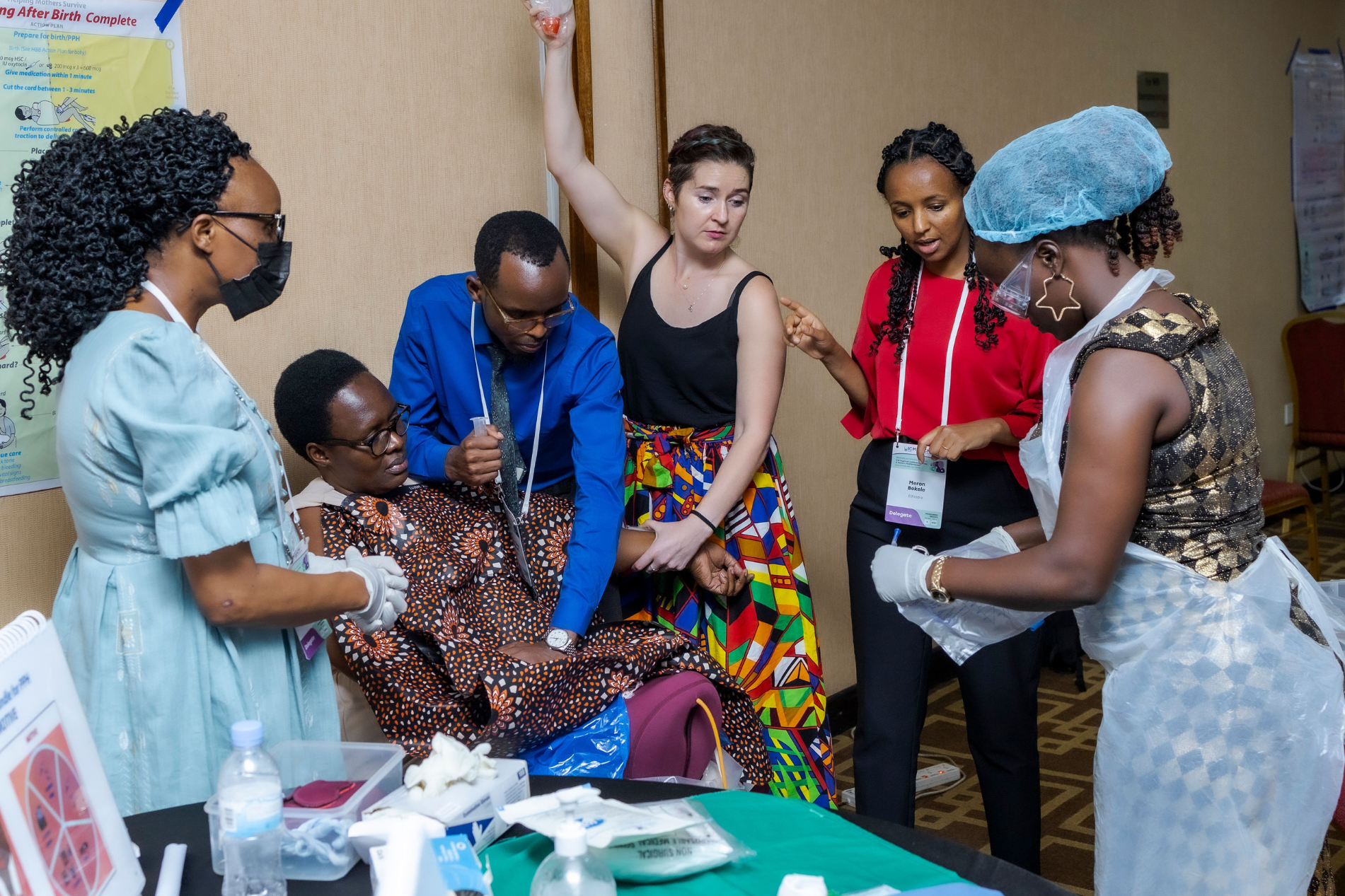
Over the last 25 years, I’ve had the privilege of meeting passionate midwifery faculty in Sierra Leone, Ethiopia, Ghana, India, and other corners of the globe. Most choose education because they genuinely care about nurturing the next generation of midwives, not because they love creating lesson plans or writing exam items. The use of AI large language models to support health worker education is rapidly expanding globally. It presents great potential to transform education.
This recent post from
Alice Keeler, an EdTech leader, said it perfectly,
“AI should buy teachers time to do the things only humans can do: Build character, scaffold self-regulation, teach conflict, empathy, grit, and follow-through, and create environments where habits—not just knowledge—are formed". This blog shares evidence and insight from two recent publications on how to use AI tools to save time and effort in writing assessment items for health worker education, a challenging and time-consuming task.
Educators in fields such as midwifery often face immense pressure to develop quality exam questions that accurately assess student knowledge and critical thinking. Recent studies have demonstrated that advanced AI models can produce multiple-choice questions (MCQs) with psychometric properties comparable to those generated by expert human assessment authors. A study conducted in Australia by Wu and colleagues found that AI-generated MCQs demonstrated similar levels of difficulty and discrimination as those crafted by expert assessment item authors. This reinforces educators can leverage AI to streamline the creation of assessments, allowing them to dedicate more time to teaching essential qualities that define a successful midwife--compassion, ethics, and perseverance.
Read the paper hereAI systems can inadvertently amplify existing gender biases in women’s health data and research, an area where data gaps and historical underrepresentation are well documented. So while AI can rapidly speed up creating effective assessment items, human oversight remains essential. Wu’s study highlighted that while AI-generated questions were largely comparable to human-written ones, there was a gap in the effectiveness of distractors used in those questions, particularly when compared to expert assessment item authors. It’s also important to gauge for bias and context. A hybrid approach that combines the efficiency of AI, with the nuanced understanding of human educators, can improve the quality of assessments and save educators' precious time.
An additional study from Thailand examined the differences between AI tools in creating and evaluating multiple-choice questions (MCQs) within orthopedic education. This research revealed that some tools demonstrate stronger performance when it comes to accuracy and speed. These findings reinforce the potential of AI to not only assist in crafting assessments but also to provide rapid feedback to students.
However, just as Wu’s study found, this study also highlighted the need for educator oversight. AI may not always capture the complexities of clinical reasoning necessary for effective midwifery practice, and it is fundamental that human educators are involved in refining assessment items to ensure they meet educational standards, do not present bias and closely mirror real-world scenarios.
Read the paper here The integration of AI into midwifery education presents a unique opportunity to improve the assessment process and the overall educational experience for students. For those looking to go deeper into this topic, you are welcome to review and subscribe to the
TechForward Health Workforce newsletter which these articles are featured in.
By embracing these technologies, educators can reduce their workload and create more time for teaching critical skills such as character, empathy, and critical thinking.